
Had the Flu? Here’s When It’s Actually Safe to Go Back to the Gym
Had the Flu? Here’s When It’s Actually Safe to Go Back to the Gym
If it feels like everyone in Melbourne has the flu right now, there is a reason.
Victoria’s latest respiratory surveillance report says influenza activity is high and describes 2026 as a later-than-usual season, with cases climbing through winter and into spring. Influenza A notifications are currently higher than at the same point in recent years, and community reporting of fever and cough is also elevated (Victorian Department of Health 2026).
So there are a lot of people asking the same question:
I’m finally starting to feel human again. Can I go back to the gym?
The frustrating answer is that there is no magic “day seven” when everybody is automatically ready. Flu recovery varies enormously. Some people bounce back quickly. Others lose the fever but remain wiped out, weak or coughy for another week.
What you should not do is make the decision based on guilt.
Missing a handful of gym sessions because you have influenza is not going to undo months of training. Trying to make up for them before your body is ready is far more likely to turn an ordinary week off into a much longer interruption.
First: Flu Is Not the Same as a Mild Cold
The old fitness advice about using the “neck check” has been around for decades.
The basic idea is that symptoms confined above the neck - a mild runny nose, sneezing or minor sore throat - may be compatible with gentle exercise, while fever, widespread aches, gastrointestinal symptoms, significant fatigue or chest symptoms mean you should rest.
There is some common sense in that distinction, but it is not a scientifically validated permission slip to exercise whenever symptoms happen to sit above your collarbone. Modern sports-medicine researchers have pointed out that evidence behind the rule is limited and that respiratory illnesses vary greatly in severity (Ruuskanen et al. 2024).
And genuine influenza tends to be a different beast from a sniffle.
Fever, chills, body aches, exhaustion, headache and a significant cough are all good reasons to forget about training and recover.
Research on febrile illness also shows that fever increases metabolic demand, fluid loss and perceived fatigue while reducing strength and endurance (Dick & Diehl 2014).
If you are lying in bed wondering whether you should train, you probably already have your answer.
Definitely Stay Home If You Still Have These Symptoms
There are some fairly straightforward signs that today is not gym day.
If you still have a fever or feel feverish, significant body aches, chills, marked fatigue, vomiting or diarrhoea, poor hydration, dizziness, unusual shortness of breath or a heavy chesty illness, rest.
The same applies if you are technically out of bed but ordinary activities are still wiping you out. If showering, walking to the shops or making lunch feels like an event, your body is giving you useful information.
You also need to be eating and drinking reasonably normally again. Influenza can leave people dehydrated and with a poor appetite, which is not an ideal starting point for a strength session.
There is no prize for being the person who trained with the flu.
“My Fever Is Gone. Am I Ready Now?”
Possibly. But losing the fever is the beginning of the decision, not the entire decision.
Before returning, ask yourself a few simple questions:
Are my symptoms clearly improving rather than just temporarily suppressed by medication?
Can I get through a normal day without needing to lie down afterwards?
Am I eating and drinking normally?
Can I walk for 10–15 minutes without feeling unusually breathless, dizzy or completely depleted?
Does my body feel ready to move, or am I trying to convince it?
A 2022 systematic review examining more than 31,000 athletes found that the average duration of symptoms from an acute respiratory illness was about seven days, but recovery and return to sport varied considerably (Snyders et al. 2022). More recent prospective research found that even among athletic people with confirmed respiratory infections, returning to some training happened earlier than returning to full training and full performance (Jooste et al. 2026).
That distinction is useful for the rest of us too.
Going back to the gym does not have to mean going straight back to your normal workout.
Your First Session Back Should Feel Almost Too Easy
This is where people often get themselves into trouble.
You have missed a week. You feel behind. So you go back and decide to “see where you’re at” by doing exactly what you were doing before you got sick.
Your body has other ideas.
There is no universally validated percentage-by-percentage protocol for returning to strength training after influenza, so pretending everybody should follow exactly the same formula would be misleading. A sensible approach is to treat the first few sessions as a gradual test of how well you have actually recovered.
At CGPT, that might look something like this:
First session: keep it deliberately easy. Reduce the amount of work, use comfortable loads, take longer rests and avoid chasing personal bests. The aim is to move and see how your body responds.
Next one or two sessions: if there has been no return of significant fatigue or symptoms, gradually add more of your usual exercises and training volume.
After that: continue building towards your normal training only if your energy, appetite, sleep and general recovery are behaving normally again.
The important information is not only how you feel during the session. Pay attention to the following day as well.
If a light workout leaves you flattened for 24 hours, that is a good sign that you tried to advance too quickly.
What About a Lingering Cough?
This is one of the greyer areas because a cough can hang around after the worst of a respiratory infection has passed.
A minor residual cough does not automatically mean you cannot exercise. But a deep, persistent cough, wheezing, unusual breathlessness or chest discomfort deserves more caution and, if persistent, medical advice.
The same applies to fatigue.
Feeling slightly below your best after influenza is very different from feeling overwhelmingly exhausted after basic activity. If your energy is still dramatically reduced, give yourself more time rather than treating the gym as a test you have to pass.
Nausea and diarrhoea are also reasons to wait, particularly because of hydration and the obvious consideration of not taking gastrointestinal symptoms into a shared training environment.
There Are Actually Two Tests for Going Back to the Gym
One is whether you are ready.
The other is whether it is fair to everyone else in the room.
Victorian health guidance says adults with influenza are usually contagious for around three to five days after symptoms begin, while Australian health information notes that people may remain infectious for longer in some circumstances. You can also spread influenza before you realise you are sick (Better Health Channel; Healthdirect).
So even if you feel capable of doing a few squats, going into a shared gym while you are still acutely coughing, sneezing and clearly unwell is not particularly considerate.
CGPT may be a private personal training environment rather than a huge commercial gym, but that makes protecting trainers and other clients even more important, not less.
If you are still obviously sick, stay home.
The weights will survive.
You Haven’t Lost Everything
This is probably the reassurance regular gym-goers need most.
A week away does not wipe out your progress.
Research on resistance-training breaks shows that meaningful losses are much more closely related to longer periods away from training than a brief interruption. One study examining a one-week planned break found no appreciable difference in muscle growth, muscular endurance or power compared with continuous training, although continuous training produced somewhat greater strength improvements during the study (Coleman et al. 2024).
Longer-term detraining research tells the same broad story: strength and muscle adaptations decline progressively when training stops for extended periods, not because you took several days off while sick (Bosquet et al. 2013; Grgic 2022).
So forget the idea that you need to compensate for being ill.
You do not owe the gym anything.
This Is Where Personal Training Has a Real Advantage
Coming back from illness is one of those times when a fixed class or self-directed workout can be awkward.
You might normally squat a certain weight, complete four sets, or train at a particular intensity. None of that means it is appropriate today.
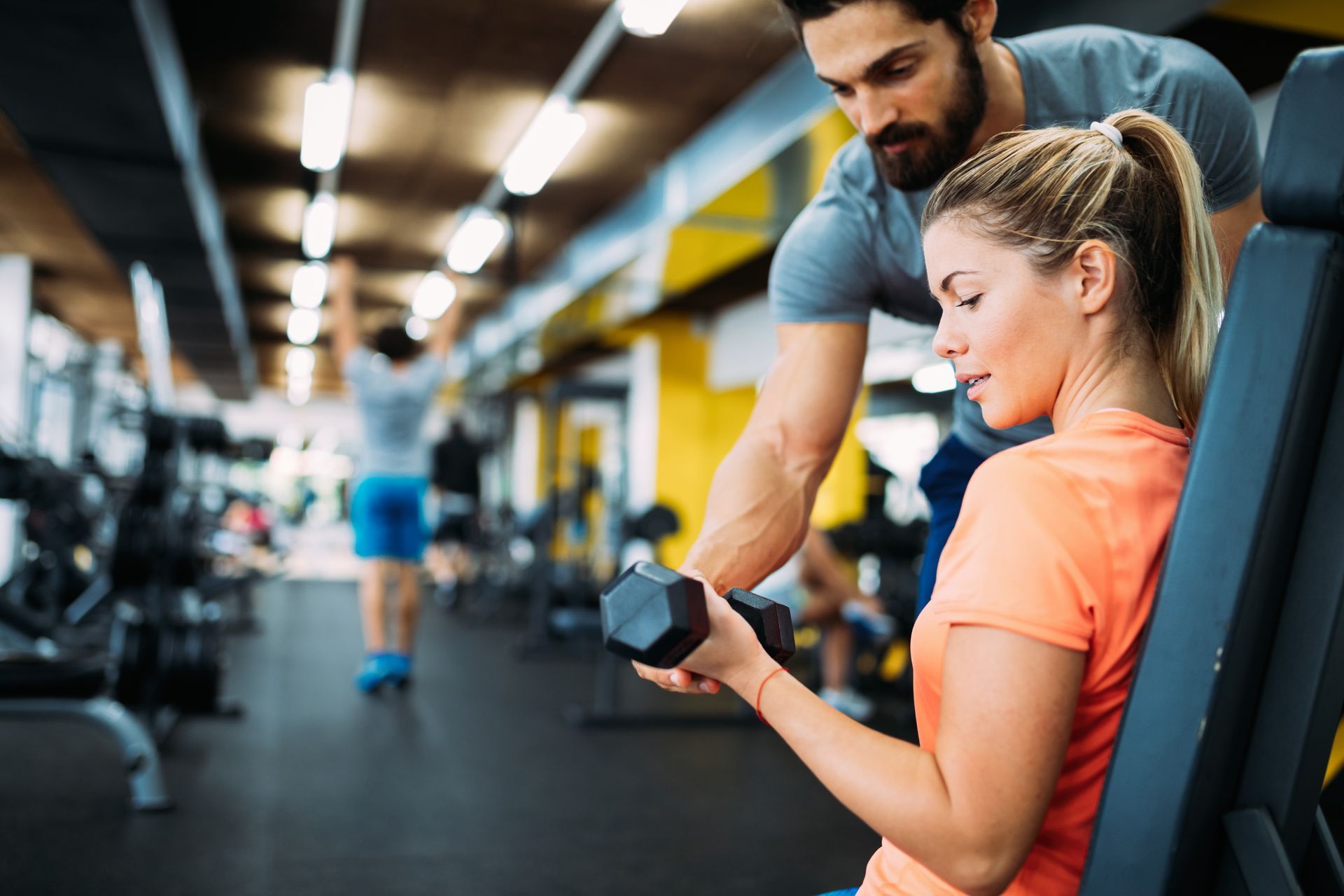
With one-on-one training, the session can be rewritten on the spot.
Maybe your usual weight suddenly feels heavy. We lower it.
Maybe you are breathing harder than normal. We extend the rest.
Maybe you arrive feeling much better than expected. Great - but we still do not need to turn the first session back into a fitness test.
At CGPT, your trainer can meet the person who walks through the door that day rather than blindly following what was written in the program before you got sick.
For somebody coming back from flu, that flexibility can be incredibly useful.
So, When Should You Come Back?
There is no single countdown that works for everybody.
Wait until the acute illness has clearly settled. Do not train with fever, significant systemic symptoms, gastrointestinal illness or substantial fatigue. Make sure you are eating, drinking and managing ordinary daily activity reasonably well. Be considerate about whether you could still be spreading the virus.
Then come back gradually.
Not heroically.
If the first session feels easier than you think it “should”, that is probably fine. You are not trying to prove that you are recovered. You are giving your body a chance to show you that it is.
And if you are a CGPT client returning after the flu, tell your trainer exactly how you have been feeling before the session starts. That gives us the opportunity to adjust things properly rather than discovering halfway through that your body was not ready for your normal program.
If you are new to CGPT and getting sick has made you realise how much you would benefit from having somebody else manage your training properly, come and have a chat with us once you are well.
Email Andrea at andrea@chrisgympt.com to arrange an intro session.
Just maybe wait until you have stopped coughing first.
Disclaimer
This article provides general information only and is not medical advice, diagnosis or treatment. Recovery from influenza varies between individuals. Seek medical advice if you are experiencing difficulty breathing, chest pain, severe or worsening symptoms, persistent fever, dehydration, confusion, significant ongoing fatigue, or if you are concerned about your recovery. People who are pregnant, immunocompromised, older, or who have significant underlying medical conditions may need individual medical advice about influenza and returning to exercise.
References
Victorian Department of Health 2026, Victorian Respiratory Surveillance Report — 2 October 2026, State Government of Victoria.
Better Health Channel, Victorian Department of Health, Influenza (flu), State Government of Victoria.
Healthdirect Australia, Influenza and preventing the spread of flu, Australian Government-supported health information service.
Snyders, C. et al. 2022, ‘Acute respiratory illness and return to sport: a systematic review and meta-analysis by a subgroup of the IOC consensus on acute respiratory illness in the athlete’, British Journal of Sports Medicine, vol. 56, no. 4, pp. 223–231.
Jooste, M. et al. 2026, ‘Factors associated with return-to-sport outcomes following pathogen-confirmed acute respiratory infections in athletes: AWARE X study’, British Journal of Sports Medicine, vol. 60, no. 14, pp. 1028–1035.
Dick, N.A. & Diehl, J.J. 2014, ‘Febrile illness in the athlete’, Sports Health, vol. 6, no. 3, pp. 225–231.
Ruuskanen, O. et al. 2024, ‘Sport and exercise during viral acute respiratory illness — Time to revisit’, Journal of Sport and Health Science, vol. 13.
Coleman, M. et al. 2024, ‘Gaining more from doing less? The effects of a one-week deload period during supervised resistance training on muscular adaptations’, PeerJ, vol. 12, e16777.
Bosquet, L. et al. 2013, ‘Effect of training cessation on muscular performance: a meta-analysis’, Scandinavian Journal of Medicine & Science in Sports, vol. 23, no. 3, pp. e140–e149.
Grgic, J. 2022, ‘Use it or lose it? A meta-analysis on the effects of resistance training cessation (detraining) on muscle size in older adults’, International Journal of Environmental Research and Public Health, vol. 19, no. 21, 14048.