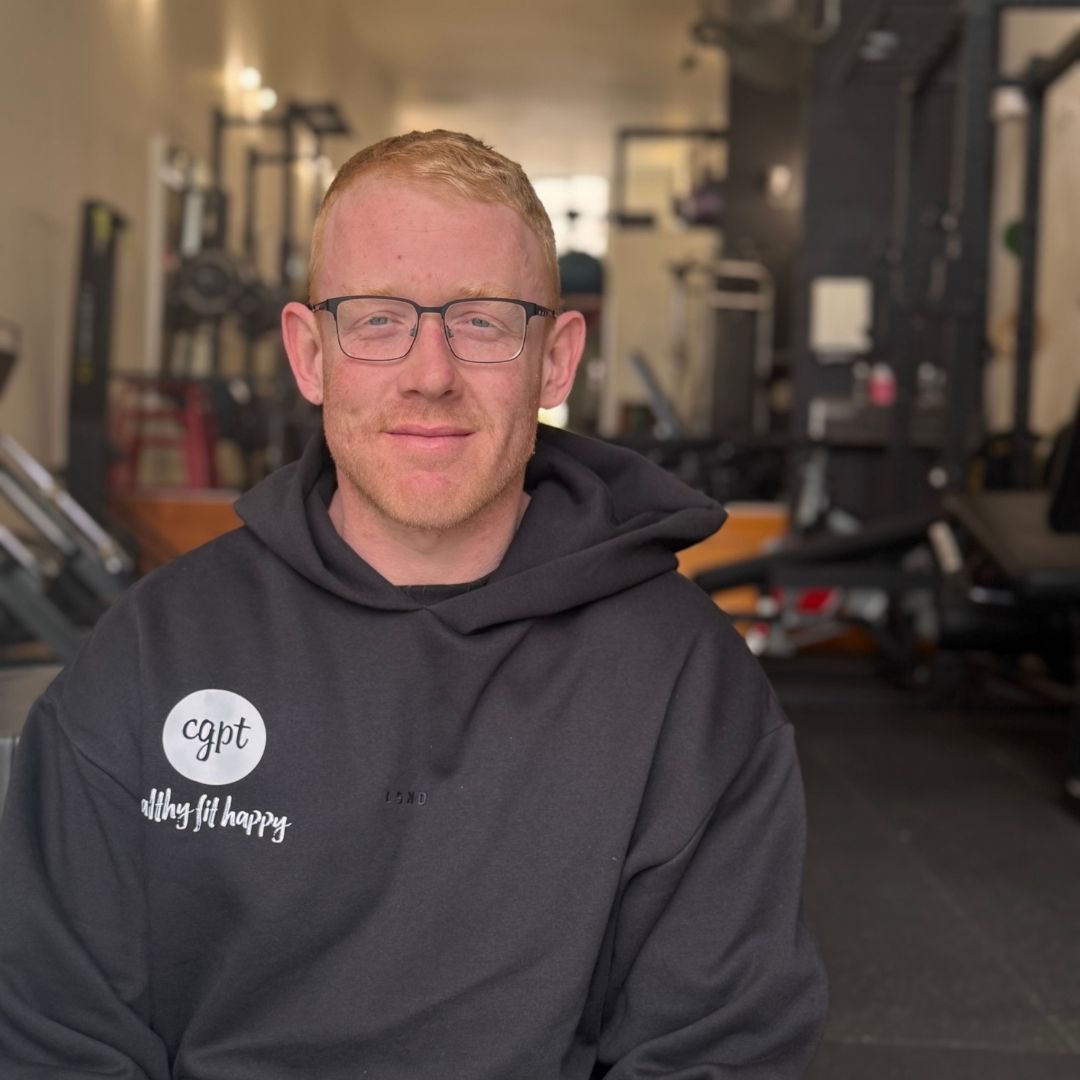
CGPT Trainer: Laurence LaRosa

Meet Laurence LaRosa: The Technical and Tailored Trainer at Chris’ Gym


At Chris’ Gym in Hawthorn, personal trainer Laurence LaRosa brings an exceptional blend of technical expertise, personal experience, and a true passion for helping people become their best. With a background in sport science and physiotherapy, Laurence’s journey to personal training was driven by a love for fitness and science. Now, he’s one of Chris’ Gym’s most dedicated trainers, known for his methodical and tailored approach to each client’s fitness journey. Here’s an inside look at Laurence’s story, his training philosophy, and why he’s so committed to guiding clients toward their fitness goals.


From Pizza Place to the Gym Floor


Laurence’s career in personal training began during his university days when he balanced jobs, studies, and fitness. “In high school, I focused heavily on science and stayed active,” Laurence recalls. It was this blend of interests that eventually led him to a Bachelor’s degree in Sport Science, followed by a Master’s in Physiotherapy. To fund his studies, Laurence took a job as a waiter at a local pizza place, Santoni, and attended night classes to earn his Certificates III and IV in Fitness. These early experiences taught him dedication, discipline, and time management, which he applies daily at Chris’ Gym.


Laurence joined Chris’ Gym after graduation and has been part of the team ever since. His combination of academic knowledge and practical experience with local sports teams - where he works with medical staff on weekends - has given him an edge in understanding the body’s movement, recovery, and performance needs. Laurence’s background is extensive, but his personal training style is anything but one-size-fits-all.


Prioritising Technique and Safety in Training


Laurence’s approach to training is rooted in technique. “Technique always comes first,” he says. With his education and hands-on experience, Laurence designs training sessions that are as safe as they are challenging. His sessions are structured to push clients to their limits, but never at the cost of proper form or safety. “Once the foundation is solid, then we challenge them to go beyond what they thought possible,” he explains.


Laurence describes his training style as “Tailored, Technical, and Rigorous.” Every workout he creates is customised to meet the unique needs and goals of each client, meaning no two sessions are the same. With a strong emphasis on technicality, Laurence ensures clients develop correct form early on. “You’ll feel the effort, but you’ll never regret it,” he says. Laurence’s approach might be intense, but his clients appreciate his focus and dedication to helping them progress safely.


Strength and Hypertrophy: Laurence’s Preferred Training Styles


Laurence loves to alternate between hypertrophy and maximal strength training. This approach allows his clients to achieve noticeable strength gains while seeing consistent progress in muscle size and endurance. “It’s effective because clients can see their hard work pay off,” he shares. By incorporating hypertrophy (muscle growth) with strength training, Laurence ensures his clients build both power and endurance - a balanced approach to fitness that benefits clients of all levels.


Laurence has seen transformations of all kinds over the years, but one story stands out. “I was assigned a client who’d been to gyms before but hadn’t yet reached his full potential,” Laurence recalls. This client trusted Laurence to help him reach his strength goals, and after nine months, he surpassed his expectations, lifting twice his body weight. Moments like these remind Laurence why he loves personal training - helping clients reach heights they never thought possible is what keeps him motivated and passionate.


Empowering Clients Through Customised Coaching


A big part of Laurence’s success as a trainer is his ability to adapt his coaching style to suit each client. “No one size fits all,” he says. By carefully observing his clients and communicating openly, Laurence identifies the best coaching style and programming for each individual. This approach ensures that clients feel empowered, engaged, and supported, regardless of their fitness level.


Laurence’s philosophy is about more than physical fitness; it’s about mental growth, too. “A lot of people avoid personal training because they’re intimidated or unsure,” he says. “But we’re all in the same boat, just trying to get through the waves.” Laurence’s clients quickly discover that his coaching style is about guiding them through every step, and no one ever regrets giving it a try. By offering a supportive and encouraging environment, Laurence helps clients overcome fears, build confidence, and make fitness a positive part of their lives.


Beyond the Gym: Futsal, Soccer, and Hidden Talents


When Laurence isn’t at the gym, he stays active through his love for soccer and futsal. “I hate running - except after a ball,” he jokes. Laurence plays casual futsal on weeknights and represents his local soccer club, OSFC, in competitive matches. This passion for team sports keeps him sharp, and it’s something he brings into his personal training sessions - Laurence believes that fitness should be as enjoyable as it is challenging.


Outside of fitness, Laurence has some unique hobbies. He’s a pool shark with a talent for distilling his own gin, something his clients might not guess! These unexpected skills showcase Laurence’s multidimensional personality and along with his relatable energy, makes clients feel like they’re working out with a friend.


Fitness Advice from Laurence: Don’t Underestimate the Basics


Laurence believes that strength is the foundation for all fitness goals, but he always emphasises the basics, especially for beginners. “A lot of people avoid gyms and personal training, often because they’re intimidated,” he says. “But we’re all on the same journey, and it’s worth trying.” His advice to every client, no matter their fitness goal, is to trust the basics and build a solid foundation. Consistency and patience go a long way, and as Laurence puts it, “you’ll never regret giving it a try.”


By helping clients build a strong foundation and gradually push past their limits, Laurence ensures they achieve long-term, sustainable progress. He encourages clients to start with realistic goals, work consistently, and stay focused on gradual improvement. “Throughout my coaching experience, I’ve never had anyone regret giving it a try,” he says with confidence.


Why Train with Laurence LaRosa at Chris’ Gym?


Laurence LaRosa brings an exceptional level of expertise, technicality, and dedication to Chris’ Gym. His tailored approach ensures every client receives a unique program that caters to their goals, strengths, and abilities. For clients who want to improve their form, build strength, and see results that last, Laurence’s technical training style is ideal.


Laurence’s dedication to fitness is matched only by his commitment to empowering each client. With his background in sports science and physiotherapy, his experience with local sports teams, and his tailored approach to each session, Laurence is a trainer who combines science with passion.


Ready to transform your fitness? Join Laurence at Chris’ Gym and discover how tailored, technical training can help you achieve your personal best. Get started today and see the difference a customized approach can make in reaching your fitness goals.


April 15, 2026
Why High Achievers Struggle to Rest: How Strength Training Helps Regulate Stress High achievers are often very good at pushing through. They meet deadlines, manage pressure, lead teams, make decisions, build businesses, support clients and keep going long after their body has started asking for a break. But people who are used to performing at a high level are not always good at rest. They may understand the importance of recovery in theory, but in practice, stopping can feel uncomfortable. A quiet evening becomes another chance to answer emails. A free morning becomes a guilt-inducing gap in the calendar. Even when they are physically still, their mind is still working. This is one reason stress can become so difficult to manage. For busy professionals, founders, executives, medical specialists, lawyers, consultants and business owners, stress is often treated as part of the job. But over time, a body that is constantly switched on can start to show the cost: poor sleep, muscle tension, low energy, brain fog, irritability, headaches, reduced motivation, recurring aches, and a feeling of being wired but tired. At CGPT in Hawthorn, we work with busy professionals who do not need another extreme challenge or all-or-nothing fitness plan. They need a sustainable way to build strength, regulate stress and feel more capable in their body. Done properly, strength training can become one of the most useful tools for people who struggle to switch off. Success Often Rewards Stress, Not Recovery Many ambitious professionals have spent years being rewarded for their ability to do more. More responsibility, more responsiveness, more pressure, more output. That mindset can be useful in a career, but it can become a problem when the body never gets a chance to come down. Stress itself is not always bad. Short-term stress can sharpen focus, increase alertness and help you respond to a challenge. The issue is when stress becomes constant and recovery is treated as optional. Safe Work Australia has identified psychosocial hazards as a major workplace health and safety issue, noting that exposure to these hazards can cause psychological and physical harm. Its 2024 psychological health and safety report notes that mental health conditions account for an increasing proportion of serious workers’ compensation claims in Australia (Safe Work Australia 2024). This is important because many driven professionals normalise the very things that place them under strain: high job demands, long hours, emotional load, responsibility for others, constant availability, and limited separation between work and home. Why Rest Can Feel So Difficult For people who are used to being productive, rest can feel like a threat rather than a reward. It may bring up guilt, restlessness or the sense that something is being neglected. Some people only feel calm when they are solving, planning or doing. Others have become so used to operating under pressure that stillness feels unfamiliar. This is where the nervous system is critical. Your body is not just a vehicle for your mind. It responds to your workday. Stress can affect heart rate, breathing, muscle tone, sleep, digestion, concentration and mood. If your body spends too much time in a heightened state, rest does not always happen automatically just because you sit down. This is also why scrolling, wine, late-night emails or collapsing on the couch may not be the same as recovery. They may provide distraction, but they do not necessarily help your body build resilience or regulate stress more effectively. Strength Training Is a Productive Stressor It is important to understand that exercise is a form of stress. A hard training session places demand on the body. Muscles work, heart rate rises, breathing changes and the nervous system responds. But unlike chronic work stress, well-designed strength training is controlled, structured and recoverable. This is what makes it so valuable. When strength training is properly programmed, it gives your body a clear challenge and then allows it to adapt. You lift, recover, get stronger and gradually build capacity. Over time, the same task that once felt difficult becomes more manageable. For people who are used to pushing through, this can be a powerful change. Training is not about punishing yourself for being stressed. It is about giving your body a structured way to practise effort, recovery and progression. You learn that not every session needs to be maximal. You learn that consistency beats intensity. You learn that rest is not laziness; it is part of adaptation. What the Research Says The link between exercise and mental wellbeing is well established. The Australian Government’s physical activity guidelines state that being active is essential for good mental and physical health and wellbeing, and recommend adults include muscle-strengthening activities at least two days per week (Australian Government Department of Health 2026). Research also supports the specific role of resistance training in mental health. A meta-analysis published in JAMA Psychiatry found that resistance exercise training was associated with a significant reduction in depressive symptoms among adults (Gordon et al. 2018). Another meta-analysis found that resistance exercise training significantly reduced anxiety symptoms (Gordon et al. 2017). More recent research has also explored exercise and stress physiology. A systematic review in the International Journal of Behavioral Medicine found that acute exercise was associated with reliable reductions in blood pressure and cortisol responses to stress, although effects varied depending on intensity and other factors (Mücke et al. 2024). This does not mean strength training is a cure for stress, anxiety, depression or burnout. It does mean that structured exercise can be one important part of a broader stress-management plan, particularly for people whose bodies are carrying the physical consequences of high-pressure work. Why Driven Professionals Need Structure, Not More Intensity A common mistake ambitious individuals make is turning training into another area where they have to perform. They go too hard, too soon. They chase exhaustion. They measure success by how sore they are. Then work gets busy, sleep drops, stress rises, and training becomes another demand instead of a support. That is not the goal. For a stressed professional, the right strength program should be challenging enough to create adaptation, but not so aggressive that it drains the system further. It should build strength without adding unnecessary pressure. It should improve energy, confidence and physical resilience, not become another source of guilt. This is where personal training comes in. A good trainer does more than count reps. They help you find the right level of challenge for your body, your schedule and your current stress load. They know when to progress, when to hold steady and when to adjust. That kind of guidance is especially useful for people who are used to pushing through regardless of how they feel. The Physical Signs of Chronic Stress Many professionals think of stress as mental, but it often shows up physically first. You may notice tight shoulders, jaw tension, shallow breathing, headaches, poor sleep, reduced recovery, lower back tightness, digestive changes or a general sense that your body is braced all the time. Strength training can help by building a stronger physical foundation. Stronger muscles support better posture. Stronger hips and legs reduce the sense that daily movement is effortful. Better trunk strength can improve confidence with lifting and carrying. A well-designed program can also create a clear separation between work mode and recovery mode. For many people, the benefit is not just physical. There is also a mental shift that comes from feeling capable in your body. When your body feels stronger, work stress does not necessarily disappear, but it may feel less like everything is being carried by a tired, tense system. Why CGPT Works for Busy Professionals Under Pressure CGPT is a private personal training studio in Hawthorn built around one-on-one, progressive strength training. It is not a loud commercial gym, a group class or a program designed to push everyone through the same session. For those under pressure, that is crucial. You may not have the time, energy or headspace to figure out what to do on your own. You may not want to train in a crowded environment. You may need someone to build a plan, manage the progression and help you stay consistent without making training feel like another high-pressure obligation. At CGPT, your program is built around your starting point, your goals, your work demands and your lifestyle. The focus is not on smashing you. It is on helping you build strength in a way that supports the rest of your life. That might mean training to reduce recurring tension, improve posture, support energy, rebuild confidence, or simply create a reliable routine that gives your body something consistent and positive to respond to. A Better Way to Manage Pressure People operating under constant pressure do not need to be told to work harder. Most already know how to do that. What many need is a better way to recover, regulate and build physical resilience so their body can keep up with the life they are asking it to live. Strength training will not remove every source of stress. It will not replace proper sleep, medical care, psychological support or workplace change where those things are needed. But it can give your body a structured, evidence-informed way to adapt to pressure rather than simply absorb it. If you recognise yourself in this, a complimentary intro session at CGPT is a good place to start. We can talk through your work routine, stress load, training history and what you want to feel more capable of, then help you understand what a sustainable strength plan could look like. To find out more or book an intro session, email Andrea at andrea@chrisgympt.com Disclaimer This article is for general informational purposes only and does not constitute medical or mental health advice, diagnosis or treatment. Stress, burnout, anxiety, depression, sleep disruption and physical symptoms can have many causes. If you are experiencing significant distress, persistent low mood, panic symptoms, thoughts of self-harm, severe fatigue, chest pain, unexplained symptoms or symptoms that are worsening or not improving, please consult your GP, psychologist or qualified healthcare provider. If you are in immediate danger or need urgent mental health support in Australia, call 000 or Lifeline on 13 11 14. References Australian Government Department of Health, Disability and Ageing 2026, Recommendations for adults (18 to 64 years): 24-hour movement guidelines for all Australians, Australian Government, Canberra. Gordon, B.R. et al. 2017, ‘The effects of resistance exercise training on anxiety: A meta-analysis and meta-regression analysis of randomized controlled trials’, Sports Medicine, vol. 47, pp. 2521–2532. Gordon, B.R. et al. 2018, ‘Association of efficacy of resistance exercise training with depressive symptoms: Meta-analysis and meta-regression analysis of randomized clinical trials’, JAMA Psychiatry, vol. 75, no. 6, pp. 566–576. Mücke, M. et al. 2024, ‘The effects of acute exercise on stress reactivity assessed via a systematic review and meta-analysis’, International Journal of Behavioral Medicine, vol. 31, pp. 780–792. Safe Work Australia 2024, Psychological health and safety in the workplace, Safe Work Australia, Canberra. World Health Organization 2020, WHO guidelines on physical activity and sedentary behaviour, World Health Organization, Geneva.
April 5, 2026
The Desk Worker’s Strength Audit: 7 Signs Your Body Isn’t Coping With Your Job If you work at a desk all day, your body is probably sending you signals long before anything becomes a “real” injury. A tight lower back at the end of the day. Shoulders that creep towards your ears. Hips that feel stiff when you stand up. Energy that disappears by 3pm. A vague sense that your body feels older, heavier or less capable than it should. These signs are common, but they are not random. For many desk-based professionals, they are the predictable result of long hours sitting, high mental load, limited movement and less-than-perfect work-from-home setups. A laptop on the dining table, calls from the couch, a chair that was never designed for a full workday, or hours of back-to-back meetings can gradually change how your body feels and functions. At CGPT in Hawthorn, we see this pattern all the time. Busy professionals do not usually need a punishing fitness overhaul. They need a clear, personalised strength plan that helps their body cope better with the demands of work, life and training. This desk worker’s strength audit is a simple way to notice whether your body is starting to struggle. 1. Your Lower Back Feels Tight After Sitting Lower back tightness is one of the most obvious signs that your body is not tolerating desk work well. It may feel fine in the morning, then gradually tighten through the day, especially after long periods of sitting, driving or working from home. Back problems are a major health issue in Australia. The Australian Institute of Health and Welfare reports that back problems were the third leading cause of disease burden in Australia in 2023, accounting for 4.3% of total disease burden, with $3.4 billion spent on treatment and management in 2020–21 (AIHW 2023). For desk workers, the issue is often not that the lower back is “weak” in isolation. It may be that the hips, glutes, core and upper back are not sharing load properly. Stretching might help temporarily, but if the same tightness keeps returning, your body may need more capacity, not just more flexibility. 2. Your Neck and Shoulders Always Feel Loaded Desk work often pulls the head and shoulders forward: laptop screens, phone use, long emails, spreadsheets and video calls all encourage the same rounded position. Over time, your neck and shoulders can start to feel constantly switched on. SafeWork NSW notes that office and administrative workers are at greater risk of excessive sedentary behaviour, which is linked with musculoskeletal disorders, tiredness, reduced productivity and poorer overall health (SafeWork NSW 2024). Research in office workers also supports the role of strengthening exercise for neck and shoulder symptoms. A systematic review in Physical Therapy found workplace-based strengthening exercises were effective in reducing neck pain in symptomatic office workers (Chen et al. 2018). This is why “fixing posture” is not just about sitting up straighter. Your upper back, shoulders and trunk need enough strength and endurance to support you through the day. 3. You Feel Stiff Every Time You Stand Up If you feel like you need a few steps to “unfold” after sitting, your hips and spine may be telling you they have spent too long in one position. Sitting keeps the hips flexed and the body relatively still. If you rarely move through full ranges of motion, standing up can feel stiff, awkward or uncomfortable. Safe Work Australia says workers should not stay in seated, standing or other static postures for long periods (Safe Work Australia 2024). Movement breaks are helpful, but they are only one part of the solution. Your body also needs strength through the positions you want to access easily: hinging, squatting, rotating, stepping, reaching and carrying. At CGPT, this is where personalised training comes in. Rather than throwing you into random exercises, a trainer can identify where you are stiff, where you are under-supported and what needs to be progressed gradually. 4. Your Energy Crashes Even Though You “Haven’t Done Anything” One of the frustrating things about desk work is that it can leave you exhausted without making you physically fitter. You can finish the day mentally drained, physically stiff and too tired to train, even though you have barely moved. This is an important point because physical inactivity and sedentary behaviour are not the same problem. You can do a workout and still spend most of your day sitting. Australia’s adult movement guidelines recommend being active most days, including muscle-strengthening activities on at least two days per week, and reducing and breaking up sedentary time (Australian Government Department of Health 2026). Strength training helps because it gives your body a stronger physical base. You are not just burning calories or “doing exercise.” You are building the muscles, joints and movement confidence that help you feel more capable across the whole week. 5. Your Posture Collapses When You Get Tired Most people can sit tall for a few minutes when they think about it. The real test is what happens when you are tired, busy, stressed or deep in work. If your posture collapses the moment you stop concentrating, it may not be a discipline issue. It may be an endurance issue. Posture is not a fixed position. It is the ability to move, support yourself and change positions without feeling strained. That requires strength through the upper back, trunk, hips and legs. It also requires a program that builds gradually so your body can tolerate more work over time. This is one reason generic workouts often fall short. A class or app may make you sweat, but it may not address the specific weaknesses that show up in your workday. A well-designed strength program should make real life feel easier, not just make the session feel hard. 6. You Avoid Lifting, Carrying or Training Because You Don’t Trust Your Body Another sign your body is not coping is when you start negotiating with it. You avoid carrying heavy bags. You hesitate before lifting something from the floor. You skip training because your back feels “a bit funny.” You feel unsure which exercises are safe, so you do less and less. That loss of confidence really matters. The Royal Australian College of General Practitioners notes that exercise is one of the best treatments for ongoing low back pain and that strengthening exercises, including resistance training, can help reduce pain and improve everyday function (RACGP 2024). For many people, the right answer is not avoiding movement altogether, it’s learning how to move well and progress safely. At CGPT, the one-on-one model is designed for exactly this. You are not left guessing on a busy gym floor. Your trainer can adapt exercises to your starting point, build confidence with technique and progress your program in a way that feels achievable. 7. You Keep Promising Yourself You’ll “Get Back Into It” If you keep telling yourself you will start training when work calms down, after the next deadline, after school holidays, after travel, or once your back feels better, your routine may not be realistic enough for your actual life. Busy professionals need structure. Not an extreme challenge. Not a random collection of workouts. A plan. Strength training works best when it is consistent, progressive and tailored to the person doing it. That is why personal training can be so valuable for desk workers. It removes the guesswork and helps you build momentum even when life is busy. At CGPT, we understand that most professionals are not training for a bodybuilding competition or trying to become a different person overnight. They want to feel stronger, move better, have more energy, reduce recurring niggles and know they are doing the right things for their body. What Your Audit Results Mean If you recognised yourself in one or two of these signs, it may be time to pay closer attention to how your workday is affecting your body. If you recognised yourself in most of them, your body is probably asking for more support. The good news is that you do not need to wait until something becomes a serious problem. A well-coached strength program can help you build the capacity your desk-based life demands: stronger hips, better trunk control, more resilient shoulders, improved posture, more confidence and a clearer sense of what your body needs. CGPT is a private personal training gym in Hawthorn built around structured, progressive strength training. It is calm, personalised and one-on-one, which makes it a great fit for professionals who want expert guidance without the overwhelm of a commercial gym or the guesswork of training alone. If this audit felt uncomfortably familiar, a complimentary intro session is a good place to start. We can talk through your work routine, what your body is telling you, what you have tried before and what you want to feel capable of again. No pressure, no judgement, just a clear first step. To find out more or book an intro session, email Andrea at andrea@chrisgympt.com . Disclaimer This article is for general informational purposes only and does not constitute medical advice, diagnosis or treatment. Pain, stiffness, fatigue and changes in function can have many causes. If you have severe pain, pain following trauma, unexplained symptoms, numbness, weakness, changes to bladder or bowel control, or symptoms that are worsening or not improving, please consult your GP, physiotherapist or qualified healthcare provider before beginning an exercise program. References Australian Government Department of Health, Disability and Ageing 2026, Recommendations for adults (18 to 64 years): 24-hour movement guidelines for all Australians, Australian Government, Canberra. Australian Institute of Health and Welfare 2023, Back problems, AIHW, Canberra. Chen, X. et al. 2018, ‘Workplace-based interventions for neck pain in office workers: Systematic review and meta-analysis’, Physical Therapy, vol. 98, no. 1, pp. 40–62. Royal Australian College of General Practitioners 2024, Exercise for ongoing low back pain, RACGP, Melbourne. Safe Work Australia 2024, Sitting and standing, Safe Work Australia, Canberra. SafeWork NSW 2024, Sedentary work, SafeWork NSW, Sydney. World Health Organization 2020, WHO guidelines on physical activity and sedentary behaviour, WHO, Geneva.
March 27, 2026
Lower Back Tightness From Sitting? Why Stretching Isn’t Enough for Desk Workers If your lower back feels tight after a long day at your desk, stretching might help for a few minutes. But if the tightness keeps coming back, the issue is probably not just flexibility. For many desk-based professionals, lower back tightness comes from hours in static positions, often in less-than-ideal work-from-home setups: laptops on kitchen tables, dining chairs used as office chairs, couches doubling as desks. Add meetings, commuting, stress and limited training time, and your body starts to feel the load. This is where personalised strength training becomes essential. At CGPT in Hawthorn, we work with professionals who spend much of their week sitting, emailing, driving or working from home. They need a personalised plan that builds strength through the hips, glutes, core and upper back so the lower back no longer has to compensate for everything. Lower Back Tightness Is Common, But It Shouldn’t Be Ignored Back problems are a major issue in Australia. The Australian Institute of Health and Welfare reports that back problems were the third leading cause of disease burden in Australia in 2023, accounting for 4.3% of total disease burden. In 2020–21, an estimated $3.4 billion was spent on treatment and management (AIHW 2023). For desk workers, lower back tightness often develops gradually. It might start as mild stiffness at the end of the day, then become something you feel when you stand up after sitting. Over time, it can affect training, sleep, driving or confidence with lifting. Why Desk Work Creates the Perfect Conditions for Back Tightness Professional work is mentally demanding but physically repetitive. You may be making decisions, managing clients, writing proposals or sitting through long meetings, but physically your body is doing very little. You are often in the same position for hours, with your hips flexed, spine relatively still, shoulders rounded and glutes underused. Safe Work Australia notes that sitting for long periods is common in Australian workplaces and that workers should not remain in seated, standing or other static postures for extended periods (Safe Work Australia 2024). Working from home can make this worse. In an office, you may naturally walk to meetings or move between spaces. At home, it is easy to sit in the same chair for hours, take calls from the couch, or work from a laptop without proper screen height, foot position or back support. This does not mean you need a perfect home office before you can feel better. It means your body needs to be strong and adaptable enough to cope with real life, not just ideal conditions. Why Stretching Feels Good But Doesn’t Solve the Problem Stretching can provide short-term relief because it changes sensation. But if the same tightness returns every day, the stretch has not solved the underlying issue. Tightness is not always a flexibility problem. Sometimes it is a strength problem. Sometimes it is a load-tolerance problem. If your hips lack strength, your core lacks endurance, your glutes are not contributing effectively, or your upper back cannot support posture under fatigue, your lower back may keep taking over. Research supports this broader view. A systematic review and meta-analysis led by Australian researchers Searle, Spink, Ho and Chuter found that exercise programs have beneficial effects for chronic low back pain, with strength/resistance and coordination/stabilisation programs showing significant effects (Searle et al. 2015). In other words, the evidence points toward structured exercise that builds strength, control and capacity. The Real Goal: Build Capacity, Not Just Flexibility If you are a desk worker with recurring lower back tightness, the goal should not simply be to “loosen up.” The goal should be to increase your body’s capacity so your back is not constantly operating near its limit. Capacity means your muscles, joints and nervous system can tolerate the demands of your day without tipping into stiffness, pain or fatigue. For a corporate professional, that might mean sitting through a long meeting without feeling locked up afterwards, managing heavy desk hours without the familiar lower back ache, or having enough physical resilience to handle work and training. A well-designed strength program teaches your body how to share load properly. Your glutes support your hips. Your core stabilises your spine. Your upper back supports posture. Your legs generate force so your lower back does not have to do everything. Why “Just Move More” Is Helpful But Not Enough Taking breaks from sitting is important. But movement breaks alone may not be enough if your body lacks strength. Walking around the office is useful, but it does not progressively load your glutes, build trunk endurance or strengthen the posterior chain in a measurable way. This is why the solution needs to be layered. Yes, move more during the day. Yes, change positions regularly. Yes, stretch if it helps. But if you want long-term change, you also need structured strength training that progresses over time. A good lower-back-supportive strength program should be gradual, personalised and specific to your starting point. For many desk workers, this might include a movement assessment, hip-hinge patterns, glute strengthening, controlled squatting, upper-back strengthening, carries, core stability and mobility work. The Royal Australian College of General Practitioners notes that strengthening exercises, including resistance training, can help reduce pain and improve everyday function (RACGP 2024). Why Desk Workers Need Personalised Training Lower back tightness is not the same for everyone. One person may need more hip mobility. Another may need glute strength. Another may need better trunk control or lifting technique. This is why generic programs often fall short. Desk workers and professionals also have specific lifestyle constraints. You may be time-poor, mentally fatigued, travelling for work, sitting in long meetings or trying to fit training around family commitments. Your program has to work with that reality, not ignore it. At CGPT, this is where the one-on-one model works so well. Your training is not random and you are not left guessing on a busy gym floor. Your trainer can look at how you move, understand your work routine, consider your history, and build a program that suits your body, your schedule and your starting point. CGPT is not a loud commercial gym or a one-size-fits-all group class. It is a private gym in Hawthorn built around structured, progressive strength training. That makes it well suited to professionals who want expert guidance, a calm environment and a clear plan. If you are dealing with recurring lower back tightness, a supportive environment is important. You do not want to guess which exercise is safe, wait for equipment or copy someone else’s workout. You do not want intensity for the sake of it when your body needs controlled progression, smart loading and consistent technique. The Intro Session: The Best Place to Start You do not need to wait until your back becomes a serious problem to ask for help. If your lower back keeps tightening up and you are not sure what to do next, the best first step is not another random stretch routine. It is getting clarity. A complimentary intro session at CGPT gives you the chance to talk through what you are experiencing, how your workday looks, what you have tried before and what you want your body to feel capable of again. The session is relaxed and no-pressure. At CGPT, we help clients move beyond short-term fixes and build the strength, capacity and confidence they need for the long term. If you are ready to stop guessing and start understanding what your body actually needs, we would love to invite you in for a complimentary intro session. Want to find out more? Email Andrea today at andrea@chrisgympt.com . Disclaimer This article is for general informational purposes only and does not constitute medical advice, diagnosis or treatment. Lower back pain can have many causes. If you have severe pain, pain following trauma, pain that travels down the leg with numbness or weakness, unexplained weight loss, fever, changes to bladder or bowel control, or symptoms that are worsening or not improving, please consult your GP, physiotherapist or qualified healthcare provider before beginning an exercise program. References Alaca, N. et al. 2025, ‘Low back pain and sitting time, posture and behavior in office workers: A scoping review’, Human Factors, DOI: 10.1177/10538127251320320. Australian Commission on Safety and Quality in Health Care 2022, Low Back Pain Clinical Care Standard, ACSQHC, Sydney. Australian Institute of Health and Welfare 2023, Back problems, AIHW, Canberra. Hayden, J.A. et al. 2021, ‘Exercise therapy for chronic low back pain’, Cochrane Database of Systematic Reviews, Issue 9. Royal Australian College of General Practitioners 2024, Exercise for ongoing low back pain, RACGP, Melbourne. Safe Work Australia 2024, Sitting and standing, Safe Work Australia, Canberra. SafeWork NSW 2024, Sedentary work, SafeWork NSW, Sydney. Searle, A., Spink, M., Ho, A. & Chuter, V. 2015, ‘Exercise interventions for the treatment of chronic low back pain: A systematic review and meta-analysis of randomised controlled trials’, Clinical Rehabilitation, vol. 29, no. 12, pp. 1155–1167. World Health Organization 2023, WHO guideline for non-surgical management of chronic primary low back pain in adults in primary and community care settings, WHO, Geneva.