Why High Achievers Struggle to Rest: How Strength Training Helps Regulate Stress
Why High Achievers Struggle to Rest: How Strength Training Helps Regulate Stress
High achievers are often very good at pushing through. They meet deadlines, manage pressure, lead teams, make decisions, build businesses, support clients and keep going long after their body has started asking for a break.
But people who are used to performing at a high level are not always good at rest. They may understand the importance of recovery in theory, but in practice, stopping can feel uncomfortable. A quiet evening becomes another chance to answer emails. A free morning becomes a guilt-inducing gap in the calendar. Even when they are physically still, their mind is still working.
This is one reason stress can become so difficult to manage. For busy professionals, founders, executives, medical specialists, lawyers, consultants and business owners, stress is often treated as part of the job. But over time, a body that is constantly switched on can start to show the cost: poor sleep, muscle tension, low energy, brain fog, irritability, headaches, reduced motivation, recurring aches, and a feeling of being wired but tired.
At CGPT in Hawthorn, we work with busy professionals who do not need another extreme challenge or all-or-nothing fitness plan. They need a sustainable way to build strength, regulate stress and feel more capable in their body. Done properly, strength training can become one of the most useful tools for people who struggle to switch off.
Success Often Rewards Stress, Not Recovery
Many ambitious professionals have spent years being rewarded for their ability to do more. More responsibility, more responsiveness, more pressure, more output. That mindset can be useful in a career, but it can become a problem when the body never gets a chance to come down.
Stress itself is not always bad. Short-term stress can sharpen focus, increase alertness and help you respond to a challenge. The issue is when stress becomes constant and recovery is treated as optional.
Safe Work Australia has identified psychosocial hazards as a major workplace health and safety issue, noting that exposure to these hazards can cause psychological and physical harm. Its 2024 psychological health and safety report notes that mental health conditions account for an increasing proportion of serious workers’ compensation claims in Australia (Safe Work Australia 2024).
This is important because many driven professionals normalise the very things that place them under strain: high job demands, long hours, emotional load, responsibility for others, constant availability, and limited separation between work and home.
Why Rest Can Feel So Difficult
For people who are used to being productive, rest can feel like a threat rather than a reward. It may bring up guilt, restlessness or the sense that something is being neglected. Some people only feel calm when they are solving, planning or doing. Others have become so used to operating under pressure that stillness feels unfamiliar.
This is where the nervous system is critical. Your body is not just a vehicle for your mind. It responds to your workday. Stress can affect heart rate, breathing, muscle tone, sleep, digestion, concentration and mood. If your body spends too much time in a heightened state, rest does not always happen automatically just because you sit down.
This is also why scrolling, wine, late-night emails or collapsing on the couch may not be the same as recovery. They may provide distraction, but they do not necessarily help your body build resilience or regulate stress more effectively.
Strength Training Is a Productive Stressor
It is important to understand that exercise is a form of stress. A hard training session places demand on the body. Muscles work, heart rate rises, breathing changes and the nervous system responds. But unlike chronic work stress, well-designed strength training is controlled, structured and recoverable.
This is what makes it so valuable.
When strength training is properly programmed, it gives your body a clear challenge and then allows it to adapt. You lift, recover, get stronger and gradually build capacity. Over time, the same task that once felt difficult becomes more manageable.
For people who are used to pushing through, this can be a powerful change. Training is not about punishing yourself for being stressed. It is about giving your body a structured way to practise effort, recovery and progression. You learn that not every session needs to be maximal. You learn that consistency beats intensity. You learn that rest is not laziness; it is part of adaptation.
What the Research Says
The link between exercise and mental wellbeing is well established. The Australian Government’s physical activity guidelines state that being active is essential for good mental and physical health and wellbeing, and recommend adults include muscle-strengthening activities at least two days per week (Australian Government Department of Health 2026).
Research also supports the specific role of resistance training in mental health. A meta-analysis published in JAMA Psychiatry found that resistance exercise training was associated with a significant reduction in depressive symptoms among adults (Gordon et al. 2018). Another meta-analysis found that resistance exercise training significantly reduced anxiety symptoms (Gordon et al. 2017).
More recent research has also explored exercise and stress physiology. A systematic review in the International Journal of Behavioral Medicine found that acute exercise was associated with reliable reductions in blood pressure and cortisol responses to stress, although effects varied depending on intensity and other factors (Mücke et al. 2024).
This does not mean strength training is a cure for stress, anxiety, depression or burnout. It does mean that structured exercise can be one important part of a broader stress-management plan, particularly for people whose bodies are carrying the physical consequences of high-pressure work.
Why Driven Professionals Need Structure, Not More Intensity
A common mistake ambitious individuals make is turning training into another area where they have to perform. They go too hard, too soon. They chase exhaustion. They measure success by how sore they are. Then work gets busy, sleep drops, stress rises, and training becomes another demand instead of a support.
That is not the goal.
For a stressed professional, the right strength program should be challenging enough to create adaptation, but not so aggressive that it drains the system further. It should build strength without adding unnecessary pressure. It should improve energy, confidence and physical resilience, not become another source of guilt.
This is where personal training comes in. A good trainer does more than count reps. They help you find the right level of challenge for your body, your schedule and your current stress load. They know when to progress, when to hold steady and when to adjust. That kind of guidance is especially useful for people who are used to pushing through regardless of how they feel.
The Physical Signs of Chronic Stress
Many professionals think of stress as mental, but it often shows up physically first. You may notice tight shoulders, jaw tension, shallow breathing, headaches, poor sleep, reduced recovery, lower back tightness, digestive changes or a general sense that your body is braced all the time.
Strength training can help by building a stronger physical foundation. Stronger muscles support better posture. Stronger hips and legs reduce the sense that daily movement is effortful. Better trunk strength can improve confidence with lifting and carrying. A well-designed program can also create a clear separation between work mode and recovery mode.
For many people, the benefit is not just physical. There is also a mental shift that comes from feeling capable in your body. When your body feels stronger, work stress does not necessarily disappear, but it may feel less like everything is being carried by a tired, tense system.
Why CGPT Works for Busy Professionals Under Pressure
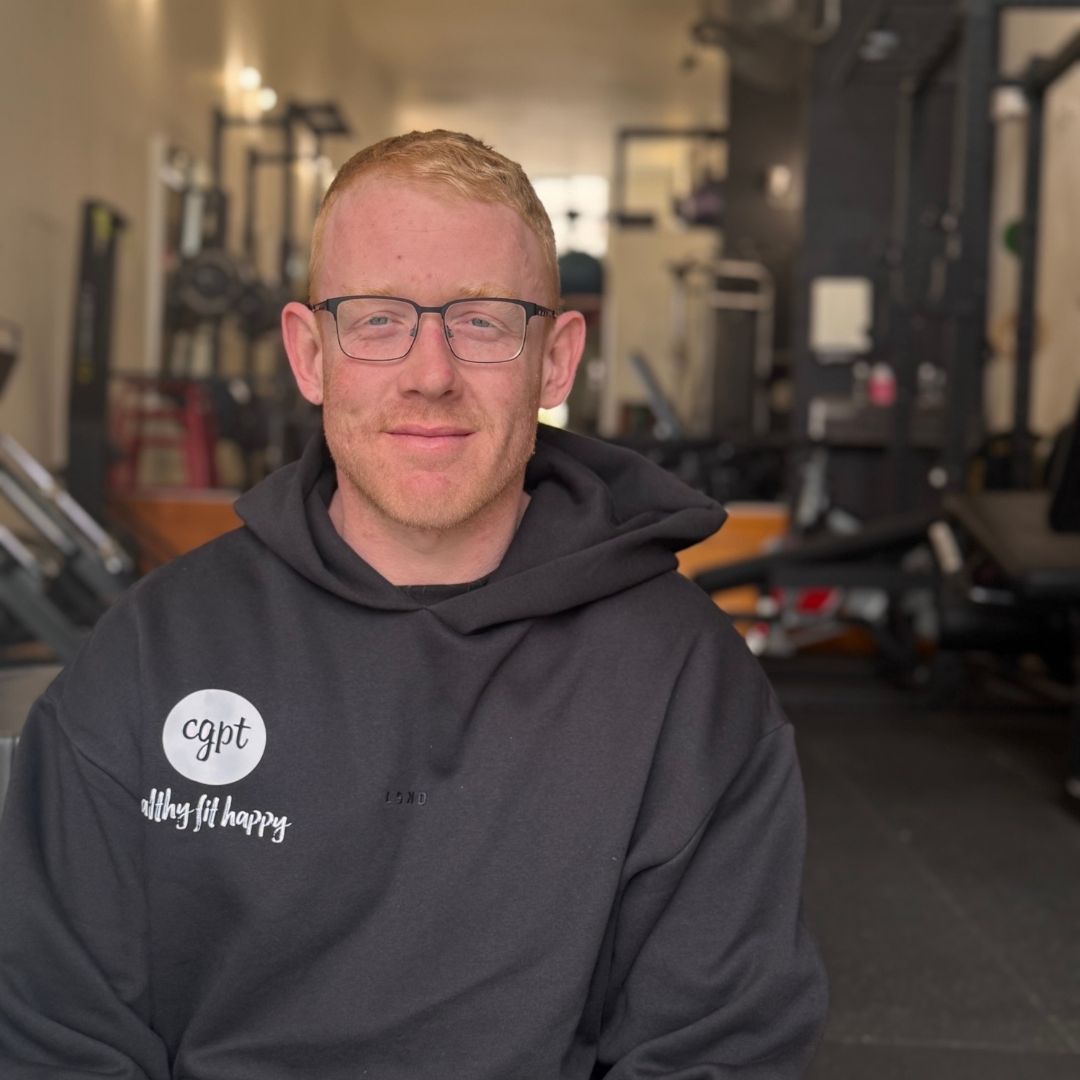
CGPT is a private personal training studio in Hawthorn built around one-on-one, progressive strength training. It is not a loud commercial gym, a group class or a program designed to push everyone through the same session.
For those under pressure, that is crucial. You may not have the time, energy or headspace to figure out what to do on your own. You may not want to train in a crowded environment. You may need someone to build a plan, manage the progression and help you stay consistent without making training feel like another high-pressure obligation.
At CGPT, your program is built around your starting point, your goals, your work demands and your lifestyle. The focus is not on smashing you. It is on helping you build strength in a way that supports the rest of your life.
That might mean training to reduce recurring tension, improve posture, support energy, rebuild confidence, or simply create a reliable routine that gives your body something consistent and positive to respond to.
A Better Way to Manage Pressure
People operating under constant pressure do not need to be told to work harder. Most already know how to do that. What many need is a better way to recover, regulate and build physical resilience so their body can keep up with the life they are asking it to live.
Strength training will not remove every source of stress. It will not replace proper sleep, medical care, psychological support or workplace change where those things are needed. But it can give your body a structured, evidence-informed way to adapt to pressure rather than simply absorb it.
If you recognise yourself in this, a complimentary intro session at CGPT is a good place to start. We can talk through your work routine, stress load, training history and what you want to feel more capable of, then help you understand what a sustainable strength plan could look like.
To find out more or book an intro session, email Andrea at andrea@chrisgympt.com
Disclaimer
This article is for general informational purposes only and does not constitute medical or mental health advice, diagnosis or treatment. Stress, burnout, anxiety, depression, sleep disruption and physical symptoms can have many causes. If you are experiencing significant distress, persistent low mood, panic symptoms, thoughts of self-harm, severe fatigue, chest pain, unexplained symptoms or symptoms that are worsening or not improving, please consult your GP, psychologist or qualified healthcare provider. If you are in immediate danger or need urgent mental health support in Australia, call 000 or Lifeline on 13 11 14.
References
Australian Government Department of Health, Disability and Ageing 2026, Recommendations for adults (18 to 64 years): 24-hour movement guidelines for all Australians, Australian Government, Canberra.
Gordon, B.R. et al. 2017, ‘The effects of resistance exercise training on anxiety: A meta-analysis and meta-regression analysis of randomized controlled trials’, Sports Medicine, vol. 47, pp. 2521–2532.
Gordon, B.R. et al. 2018, ‘Association of efficacy of resistance exercise training with depressive symptoms: Meta-analysis and meta-regression analysis of randomized clinical trials’, JAMA Psychiatry, vol. 75, no. 6, pp. 566–576.
Mücke, M. et al. 2024, ‘The effects of acute exercise on stress reactivity assessed via a systematic review and meta-analysis’, International Journal of Behavioral Medicine, vol. 31, pp. 780–792.
Safe Work Australia 2024, Psychological health and safety in the workplace, Safe Work Australia, Canberra.
World Health Organization 2020, WHO guidelines on physical activity and sedentary behaviour, World Health Organization, Geneva.