Why Your Fitness Routine Never Sticks and What Actually Helps (it’s us!)

Why Your Fitness Routine Never Sticks and What Actually Helps (it’s us!)


You know the routine.


Monday comes around and you decide this is the week. You book the class. You put the gym gear out. You buy the healthier groceries. You tell yourself you are finally getting back into it.


For a few days, it definitely works.


Then work gets messy. You sleep badly. Someone needs something from you. Your diary fills up. You miss one session, then two. By the following week, the whole thing has collapsed.


Again.


If this sounds familiar, it is easy to blame yourself. Not enough discipline. Not enough motivation. Not enough willpower. But for most people who keep stopping and starting, the real problem is not a character flaw. It is that the routine they are trying to follow was never built for their actual life.


At CGPT in Hawthorn, we meet a lot of people at exactly this point. They are not lazy. They are not unserious. They have often tried so many times before. The issue is usually that they have been trying to force themselves into fitness plans that look good on paper but fall apart the moment life becomes inconvenient.


The Restart Loop


The restart loop usually follows a predictable pattern.


You wait until you feel motivated. You choose a plan that feels impressive. You do too much too soon. You get sore, tired or overwhelmed. Something interrupts the routine. Then you stop.


After a while, guilt builds. You decide you need to “get back on track”. So you start again, often with an even bigger plan because you feel like you need to make up for lost time.


That is how people end up in a cycle of short bursts and long gaps.


The frustrating part is that every restart feels sincere. You really do mean it this time. You really do want to feel better, move better and look after yourself. But motivation is not a very reliable foundation. It comes and goes. Life does not become calm just because you have decided to exercise.


A routine that only works when everything else is going well is not a routine. It is a best-case scenario.


Most Fitness Plans Are Too Dramatic


When people decide to restart, they often go too big.


Five sessions a week. A new meal plan. No alcohol. Early mornings. A challenge. A complete reset. A whole new identity by next month.


It can absolutely feel exciting at the beginning because it creates a sense of momentum. But it also creates a huge amount of pressure. Suddenly fitness becomes another part of life where you are behind, failing or not doing enough.


That is just not sustainable for most people.


The Australian physical activity guidelines recommend adults do muscle-strengthening activities at least two days per week, along with regular physical activity and reducing sedentary time. That is a useful reminder that training does not need to start with a full lifestyle overhaul. It can start with a realistic baseline that you can actually repeat.


For many people, the better question is not “what is the most impressive program?” It is “what can I keep doing when work is busy, I am tired, and life is not perfectly organised?”


You Do Not Need to Love the Gym


A lot of people think they need to become a “gym person” before they can be consistent. They imagine they need to love training, crave workouts, feel confident around equipment and know exactly what they are doing.


You actually don’t need to love it.


You can build a reliable fitness routine without becoming obsessed with fitness. You can train because it helps your body feel better. You can show up because the appointment is there. You can follow the plan because someone has written it for you. You can get results without turning exercise into your personality.


This is one of the reasons personal training can be so helpful. It lowers the friction.


You do not have to walk into a gym and invent a session. You do not have to wonder whether you are doing enough. You do not have to negotiate with yourself for twenty minutes before deciding what to train. You arrive, the session is ready, and someone is there to guide you through it.


That sounds simple, but simple is often exactly what people need.


Consistency Is Usually a Design Problem


When a fitness routine doesn’t stick, people often blame motivation. But very often, the routine has been designed badly.

It might be too hard for your current level. It might require too much time. It might be too boring. It might leave you too sore. It might not account for your work hours, family commitments, stress, travel, confidence or injury history. It might rely on you making too many decisions when you are already tired.


A good routine removes as many unnecessary barriers as possible.


It has a clear starting point. It fits your week. It gives you enough challenge without completely flattening you. It helps you feel successful early. It changes when it needs to, but not so often that you never build momentum.


This is where CGPT’s one-on-one model is so valuable. The plan is not copied from a generic app or built for an imaginary person with unlimited time and energy. It is shaped around you: your body, your schedule, your experience, your goals and what has stopped you in the past.


The First Few Weeks Should Not Break You


A really common mistake is treating the first few weeks like a test of commitment. People train too hard, too soon, then assume the soreness means it is working.


But the goal of the first few weeks is not to prove how much you can endure. It is to build trust with your body and with the routine.


You should leave your sessions feeling like you have done meaningful work, not like you have been punished. You should be able to come back. You should start to understand the exercises, feel more confident with your technique and notice that training can fit into your week without taking over your life.


Research on behaviour change often points to the value of clear goals, feedback, planning, monitoring and support. In real life, that means people tend to do better when the next step is obvious and someone is helping them stay with it.


That is especially useful if you have a history of starting hard and stopping quickly.


Accountability Is Not Just Being Told Off


Some people hear “accountability” and imagine someone yelling at them or making them feel guilty.


That is not what good accountability looks like at all.


Good accountability is much quieter than that. It is having a session booked. It is knowing someone expects you. It is having a trainer who remembers what you did last week, notices how you are moving today, and adjusts the session if needed. It is being encouraged when you are flat, slowed down when you are rushing, and kept on course when you are tempted to disappear.


For many people, that support is the difference between another false start and a routine that finally becomes normal.


At CGPT, the environment helps too. It is private, calm and one-on-one. You are not competing for space in a crowded gym or trying to keep up with a group class. You can ask questions, build confidence and train at the right level for where you are now.


The Real Result Is Trust


Of course people want visible results. They want to feel fitter, leaner, healthier, more toned, more capable. Those goals are valid.


But one of the most amazing things that happens when training finally becomes consistent is that you start to trust yourself again.


You stop feeling like the person who always starts and stops. You stop waiting for the perfect week. You stop needing a full reset every few months. You build evidence that you can show up, even imperfectly, and keep going.


That changes how people feel about exercise. It becomes less emotional. Less dramatic. Less tangled up with guilt.


It simply becomes something you do because your body feels better when you do it.


A Better Place to Start


If you keep restarting your fitness routine, you probably do not need another extreme plan. You need a better first step.


That might mean two sessions a week instead of five. It might mean learning the basics properly. It might mean having someone else make the plan so you are not constantly deciding, doubting or delaying. It might mean training in a setting where you feel comfortable enough to keep coming back.


At CGPT, we help people build fitness routines that fit real life, not fantasy life. The aim is to help you train consistently, feel confident in your body and make progress without the stop-start cycle.


If you are tired of promising yourself you will start again, come in and talk to us. An intro session at CGPT is a relaxed chance to chat through what has not worked before, what you want now, and what a realistic training routine could look like for you.


To find out more or book an intro session, email Andrea at andrea@chrisgympt.com.


Disclaimer


This article is for general informational purposes only and does not constitute medical advice, diagnosis or treatment. Exercise needs vary depending on your health history, current fitness, injuries, medications and other individual factors. If you have pain, a medical condition, recent injury, significant fatigue, or symptoms that are worsening or not improving, please consult your GP, physiotherapist or qualified healthcare provider before beginning a new exercise program.


References

Australian Government Department of Health, Disability and Ageing 2026, Recommendations for adults (18 to 64 years): 24-hour movement guidelines for all Australians, Australian Government, Canberra.


Michie, S. et al. 2013, ‘The Behavior Change Technique Taxonomy (v1) of 93 hierarchically clustered techniques: building an international consensus for the reporting of behavior change interventions’, Annals of Behavioral Medicine, vol. 46, no. 1, pp. 81–95.


Rhodes, R.E. & Dickau, L. 2012, ‘Experimental evidence for the intention–behavior relationship in the physical activity domain: a meta-analysis’, Health Psychology, vol. 31, no. 6, pp. 724–727.


World Health Organization 2020, WHO guidelines on physical activity and sedentary behaviour, World Health Organization, Geneva.



June 30, 2026
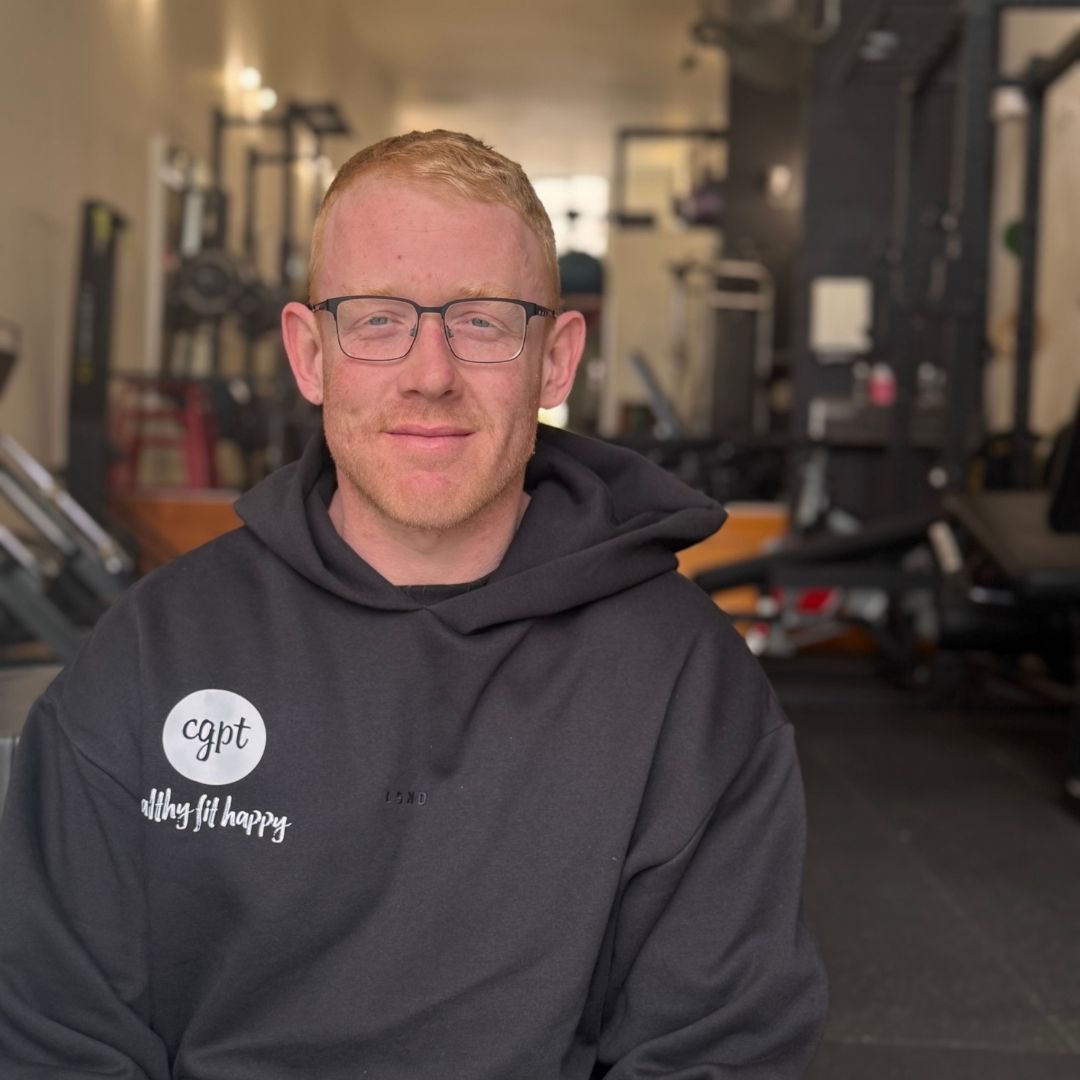
Meet Joshua Clark-Henry: The Personal Trainer Who Knows What Real Change Takes For Joshua Clark-Henry, becoming a personal trainer wasn't simply a career choice. It grew from an experience that fundamentally changed his own life. After struggling with his weight from a young age, Josh decided to make a change and went on to lose 50 kg in 11 months. The physical transformation was significant, but what stayed with him was everything required to get there: learning new habits, turning up repeatedly, navigating difficult days and discovering what he was capable of when he gave himself enough time to make progress. Today, Josh brings that perspective to his work as a personal trainer at CGPT in Hawthorn, working with people across different ages, abilities and starting points. He knows that walking into a gym with a goal is one thing; figuring out how to make that goal work within an actual life is another. His job is to help bridge that gap. From Losing 50 kg to Helping Other People Change Their Lives Josh had lived with being overweight for most of his life when he embarked on his own weight-loss journey. Over 11 months, he lost 50 kg - an achievement that ultimately changed the direction of his career. “I never looked back,” Josh says. Having experienced such a substantial transformation himself gives Josh an understanding of weight loss that can't come solely from studying it. He remembers being at the beginning. He understands that motivation isn't identical every week and that changing established behaviours requires more than being handed a workout program. It's one of the reasons he particularly enjoys working with clients pursuing weight loss and body composition goals. Their achievements resonate with him because he's been through his own version of that process. But Josh isn't exclusively a weight-loss coach. At CGPT, he works with general-population clients pursuing all kinds of outcomes, from becoming stronger and fitter to moving more regularly, establishing a reliable exercise routine or simply feeling better in themselves. His personal history informs his coaching. It doesn't define the limits of it. Challenging Training Without Making Exercise Complicated Josh describes his style as challenging, energetic and fun. He wants clients to work. He also knows that making a session harder for the sake of making it harder isn't good coaching. Instead, Josh gauges what the individual in front of him can realistically manage and works from there. An exercise can be modified. A session can change direction. The difficulty can increase as someone's ability develops. “Everyone has their own pace,” he says. “It's up to me to match that and get the best out of them.” That ability to respond in the moment has become an important part of Josh's skill set. Rather than expecting every person to fit a predetermined template, he adjusts the training to suit the person. For someone new to exercise, that might mean stripping things back and making the session easy to understand. For an experienced client, it might mean finding an appropriate way to raise the challenge. For someone having an off day, it can mean recognising that the smartest session isn't necessarily the hardest one. The aim remains the same: keep moving forward. Why Josh Keeps Coming Back to the Squat Ask Josh for a favourite exercise and the answer is immediate: squats. They're simple, demanding and incredibly versatile - which makes them particularly useful when training people with different levels of gym experience. A squat can be introduced in an accessible format for someone learning the movement and developed over time as strength, coordination and ability increase. Variations can also be selected according to the individual rather than treating one version as universally appropriate. Josh also likes coaching a movement that people sometimes avoid. Learning how to perform an exercise you've previously found difficult can change your relationship with training. Something that once seemed beyond you gradually becomes familiar. Then manageable. Then stronger. For Josh, that's a far more useful measure of progress than simply trying to make somebody exhausted. Personal Training for Weight Loss: Why Josh Looks Beyond the Scales Because of his own history, Josh has an obvious connection with clients who come to CGPT wanting to lose weight. But he also knows the number on the scales is only one part of the process. The relationships he develops with clients and the habits they establish along the way are among the aspects of personal training he finds most rewarding. He enjoys getting to know people from different backgrounds, understanding what they're trying to accomplish and seeing behaviours that initially required considerable effort gradually become part of their normal routine. For clients seeking personal training for weight loss in Hawthorn, that distinction is important. A dramatic burst of enthusiasm can get someone started. Building repeatable behaviours is what gives that initial decision somewhere to go. Josh's own transformation may have involved a 50 kg loss, but he doesn't expect another person's story to resemble his. Different body. Different circumstances. Different goal. Different pace. The training needs to reflect that. Building Relationships That Make Showing Up Easier Josh places considerable value on rapport. Over the years, some of the most satisfying parts of coaching haven't been individual exercises or numbers written in a program. They've been the relationships and friendships he's formed with people while helping them work towards something important to them. That connection also makes him a good fit for people who don't particularly enjoy conventional gym culture. You don't need to arrive knowing the terminology. You don't need an impressive training history. And you certainly don't need to prove that you're already fit enough to have a personal trainer. Josh would rather meet you at your current level, keep the instructions straightforward and gradually ask more of you as your ability grows. There's work to do, but there's room to laugh while doing it. The Principle Josh Comes Back to Again and Again Josh's most frequently given piece of fitness advice contains only three words: Consistency is key. It's an uncomplicated philosophy, but his own experience gives it considerable weight. Major goals can become overwhelming when viewed only from the finish line. Breaking them into actions that can be repeated week after week makes them far more manageable. For one person, success might initially mean completing their scheduled training sessions. For another, it could be adding load to an exercise, improving their fitness, changing their body composition or getting back into exercise after years away from it. Josh isn't interested in expecting identical progress from different people. He's interested in establishing what progress means for that person - and then helping them keep accumulating it. Away From CGPT: Dogs, Golf and Knowing When to Keep Trying Outside CGPT, Josh's favourite way to get moving is considerably less structured: walking his dogs. He's also a golfer, although he'd be the first to question whether that's something worth advertising. By his own assessment, he's terrible. He keeps going back anyway. It's actually a fairly appropriate hobby for someone whose career revolves around reminding people that improvement doesn't require immediate mastery. Sometimes you turn up, have another go and accept that today wasn't the day. Why Choose Joshua Clark-Henry as Your Personal Trainer in Hawthorn? Josh brings something particularly valuable to the CGPT team: perspective earned from having undertaken a major fitness transformation himself. He knows what it's like to have a long way to go. He also knows what can happen when you start. For people searching for a personal trainer in Hawthorn, strength training for weight loss, body composition coaching, beginner-friendly personal training, or an experienced coach who understands that sustainable fitness has to work around real life, Josh offers an approach that is challenging without being overwhelming and personable without losing sight of the goal. Training at CGPT's private personal training gym in Hawthorn, clients receive one-on-one coaching shaped around their individual ability, objectives and rate of progression. You might want to lose weight. You might want to become stronger. You might be returning to the gym after a long absence. Or you might simply have reached the point where you know you'd benefit from somebody keeping you accountable and making sure the time you spend training is productive. Josh isn't going to ask you to become the person who lost 50 kg in 11 months. That was his journey. He's there to help you build yours.
May 4, 2026
The Strength Training Mistake Smart People Make: Why More Information Doesn’t Always Mean Better Results Some people walk into a gym with no idea what to do. Others have the opposite problem. They’ve read the studies, listened to the podcasts, bought the Apple Watch, tracked their sleep, compared training splits, downloaded the apps, saved the Instagram posts and watched enough YouTube videos to explain progressive overload at dinner. And yet, they still aren’t training consistently. The gap between what you know and what you actually do can be frustrating, especially when you are used to being highly successful and extremely competent in most other areas of your life. For educated, research-heavy professionals, this can be very frustrating. You understand the importance of strength training. You know muscle supports metabolism, bone density, posture, longevity, mental health and daily function. You may even know the Australian physical activity guidelines recommend muscle-strengthening activities at least two days per week. But knowing all of the above is not the same as doing it well, consistently and progressively. At CGPT in Hawthorn, we work with busy professionals who are successful, capable and highly informed. Many are not lacking knowledge. They are lacking a clear plan, expert coaching, accountability and a training structure that works in real life. Information Feels Productive Researching fitness feels clever because it gives you the sense that you are moving closer to a result. You compare programs, learn terminology, assess exercise variations, read about optimal rep ranges, and decide you will begin once you have found the “best” approach. The problem is that information can become a substitute for implementation. You can spend weeks learning about training without completing a single consistent block of training. You can know exactly why strength is critical while still not having a program you trust enough to follow. This is especially common among professionals who are used to making informed decisions. At work, research is often rewarded. You gather information, consider risk, compare options and avoid mistakes. That skill is super valuable. But in the gym, it can turn into analysis paralysis. Strength training does not require a perfect plan to begin. It requires an actionable plan that you can repeat, progress and adapt. Your Wearable Cannot Coach Your Squat Wearables can definitely be helpful. They can track steps, sleep, heart rate, recovery trends and general activity. For people who like data, that feedback can be very motivating. But data is not the same as coaching. Your watch might tell you that your sleep was poor or your recovery score is low. It cannot see how your knees track during a split squat. It does not notice that you are shifting weight away from one hip. It cannot adjust your load because your work stress is high, your back feels tight, or your technique is starting to change under fatigue. Technology gives you information. Coaching gives you interpretation. More data can sometimes make people feel less clear, not more clear. If you are tracking everything but still unsure what to do next, the problem may not be insufficient information. It may be the absence of a structured decision-making process. Progress Comes From Repetition, Not Constant Reinvention One of the biggest mistakes extremely well-informed professionals make with fitness is changing the plan too often. A new podcast episode suggests one method. A trainer online recommends another. A study summary says something different. Suddenly the program changes again. But strength is built through repeated exposure to the right stimulus over time. Your body needs enough consistency to adapt. If you keep changing exercises, rep ranges, goals and training frequency, it becomes difficult to know whether anything is working. Progressive strength training is not random variety. It is planned progression. That might mean gradually increasing load, improving control, expanding range of motion, adding volume, refining technique or building confidence with a movement pattern. The American College of Sports Medicine describes resistance training prescription as involving variables such as exercise selection, load, volume, frequency, rest and progression. In plain English, yes the details are important, but they matter most when they are organised into a program you can actually follow. Knowledge Does Not Remove the Need for Accountability Lots of intelligent, motivated people assume they should be able to manage their own training. After all, they manage teams, businesses, clients, patients, cases, deadlines, finances and families. Surely they should be able to manage three strength sessions a week. But fitness consistency is not just an information issue. It can also be a behaviour issue. Research on physical activity behaviour change often highlights the value of strategies such as goal setting, feedback, graded tasks, monitoring and social support. These are not signs of weakness. They are practical tools that help turn intention into action. Personal training works partly because it removes the constant negotiation. You do not have to decide what to do, whether it is enough, whether your technique is right, whether you should progress, or whether you should change the plan again. You show up, and the work has already been considered for you. For busy professionals, that level of support can be make or break. Decision fatigue is real. If your day is full of complex decisions, the last thing you may need at 6pm is another open-ended problem to solve. The Best Program Is the One You Can Sustain A technically excellent program is not useful if it does not fit your life. If it requires five sessions a week when you can realistically manage two or three, it will most certainly fail. If it leaves you so sore that you dread the next session, it will definitely fail. If it ignores your work stress, sleep, injuries, confidence or schedule, it will fail. This is where personalisation becomes important. At CGPT, we are not trying to give every client the most complicated program possible. We are building the right program for that person. For one client, that may mean rebuilding confidence after years away from the gym. For another, it may mean progressing strength around a demanding work schedule. For another, it may mean learning how to train properly after years of random classes, online plans or inconsistent gym memberships. The goal is not to impress you with complexity. The goal is to help you get stronger. Why Professionals Often Need Coaching More, Not Less The more you know, the more you may notice. You may be aware of injury risk, recovery, mobility, hormones, sleep, stress, protein, creatine, heart rate variability and training load. That awareness can be useful, but it can also make training feel more complicated than it needs to be. A good personal trainer helps simplify the process without dumbing it down. They can explain why an exercise is in your program, what it is meant to achieve, how it should feel, when it should progress and what to do if something just does not feel right. They can keep the program focused when you are tempted to overcomplicate it. They can help you distinguish between useful discomfort, poor technique, fatigue and genuine warning signs. This is particularly valuable for professionals who are used to doing a deep dive on everything. Coaching gives you a filter. It turns broad information into specific action. Why CGPT Works for People Who Like to Understand the Why CGPT is a private personal training studio in Hawthorn built around one-on-one, progressive strength training. It is not a crowded commercial gym, a group class or a generic template program. For information-heavy clients, this environment is often exactly what has been missing. You can ask questions. You can understand the reasoning behind your program. You can build confidence in your technique. You can learn how progression works without being left to interpret everything alone. Your trainer can look at your movement, your training history, your lifestyle, your goals and your current capacity, then build a program that makes sense. The focus is on practical, measurable progress: getting stronger, moving better, feeling more capable and building a routine you can actually maintain. That is the difference between collecting information and creating results. Turning Knowledge Into Action If you already understand the importance of strength training but haven’t been able to make it stick, the missing piece probably isn’t another podcast, supplement, app or saved workout. It is implementation. That means having a clear starting point, a program that suits your body, coaching that improves your technique, and a system that keeps you consistent long enough to see progress. At CGPT, we help busy professionals move from research mode into action. If you are ready to stop overthinking your training and start building strength with a clear, personalised plan, a complimentary intro session is the best place to begin. We will talk through your goals, your training history, what has stopped you from staying consistent before, and what kind of structure would actually work for your life. To find out more or book an intro session, email Andrea at andrea@chrisgympt.com Disclaimer This article is for general informational purposes only and does not constitute medical advice, diagnosis or treatment. Exercise needs vary depending on your health history, current fitness, injuries, medications and other individual factors. If you have pain, a medical condition, recent injury, significant fatigue, or symptoms that are worsening or not improving, please consult your GP, physiotherapist or qualified healthcare provider before beginning a new exercise program. References American College of Sports Medicine 2026, ‘Resistance Training Prescription for Muscle Function, Hypertrophy, and Physical Performance in Healthy Adults: An Overview of Reviews’, Medicine & Science in Sports & Exercise. Australian Government Department of Health, Disability and Ageing 2026, Recommendations for adults (18 to 64 years): 24-hour movement guidelines for all Australians, Australian Government, Canberra. Australian Institute of Health and Welfare 2024, Physical activity, AIHW, Canberra. Epton, T. et al. 2017, ‘A theory-based online health behaviour intervention for new university students: a randomised controlled trial’, BMC Public Health, vol. 17. Michie, S. et al. 2013, ‘The Behavior Change Technique Taxonomy (v1) of 93 hierarchically clustered techniques: building an international consensus for the reporting of behavior change interventions’, Annals of Behavioral Medicine, vol. 46, no. 1, pp. 81–95. Morris, M.E. et al. 2017, ‘Behavior change techniques in physical activity eHealth interventions for people with cardiovascular disease: systematic review’, Journal of Medical Internet Research, vol. 19, no. 8. Rhodes, R.E. & Dickau, L. 2012, ‘Experimental evidence for the intention–behavior relationship in the physical activity domain: a meta-analysis’, Health Psychology, vol. 31, no. 6, pp. 724–727.
April 15, 2026
Why High Achievers Struggle to Rest: How Strength Training Helps Regulate Stress High achievers are often very good at pushing through. They meet deadlines, manage pressure, lead teams, make decisions, build businesses, support clients and keep going long after their body has started asking for a break. But people who are used to performing at a high level are not always good at rest. They may understand the importance of recovery in theory, but in practice, stopping can feel uncomfortable. A quiet evening becomes another chance to answer emails. A free morning becomes a guilt-inducing gap in the calendar. Even when they are physically still, their mind is still working. This is one reason stress can become so difficult to manage. For busy professionals, founders, executives, medical specialists, lawyers, consultants and business owners, stress is often treated as part of the job. But over time, a body that is constantly switched on can start to show the cost: poor sleep, muscle tension, low energy, brain fog, irritability, headaches, reduced motivation, recurring aches, and a feeling of being wired but tired. At CGPT in Hawthorn, we work with busy professionals who do not need another extreme challenge or all-or-nothing fitness plan. They need a sustainable way to build strength, regulate stress and feel more capable in their body. Done properly, strength training can become one of the most useful tools for people who struggle to switch off. Success Often Rewards Stress, Not Recovery Many ambitious professionals have spent years being rewarded for their ability to do more. More responsibility, more responsiveness, more pressure, more output. That mindset can be useful in a career, but it can become a problem when the body never gets a chance to come down. Stress itself is not always bad. Short-term stress can sharpen focus, increase alertness and help you respond to a challenge. The issue is when stress becomes constant and recovery is treated as optional. Safe Work Australia has identified psychosocial hazards as a major workplace health and safety issue, noting that exposure to these hazards can cause psychological and physical harm. Its 2024 psychological health and safety report notes that mental health conditions account for an increasing proportion of serious workers’ compensation claims in Australia (Safe Work Australia 2024). This is important because many driven professionals normalise the very things that place them under strain: high job demands, long hours, emotional load, responsibility for others, constant availability, and limited separation between work and home. Why Rest Can Feel So Difficult For people who are used to being productive, rest can feel like a threat rather than a reward. It may bring up guilt, restlessness or the sense that something is being neglected. Some people only feel calm when they are solving, planning or doing. Others have become so used to operating under pressure that stillness feels unfamiliar. This is where the nervous system is critical. Your body is not just a vehicle for your mind. It responds to your workday. Stress can affect heart rate, breathing, muscle tone, sleep, digestion, concentration and mood. If your body spends too much time in a heightened state, rest does not always happen automatically just because you sit down. This is also why scrolling, wine, late-night emails or collapsing on the couch may not be the same as recovery. They may provide distraction, but they do not necessarily help your body build resilience or regulate stress more effectively. Strength Training Is a Productive Stressor It is important to understand that exercise is a form of stress. A hard training session places demand on the body. Muscles work, heart rate rises, breathing changes and the nervous system responds. But unlike chronic work stress, well-designed strength training is controlled, structured and recoverable. This is what makes it so valuable. When strength training is properly programmed, it gives your body a clear challenge and then allows it to adapt. You lift, recover, get stronger and gradually build capacity. Over time, the same task that once felt difficult becomes more manageable. For people who are used to pushing through, this can be a powerful change. Training is not about punishing yourself for being stressed. It is about giving your body a structured way to practise effort, recovery and progression. You learn that not every session needs to be maximal. You learn that consistency beats intensity. You learn that rest is not laziness; it is part of adaptation. What the Research Says The link between exercise and mental wellbeing is well established. The Australian Government’s physical activity guidelines state that being active is essential for good mental and physical health and wellbeing, and recommend adults include muscle-strengthening activities at least two days per week (Australian Government Department of Health 2026). Research also supports the specific role of resistance training in mental health. A meta-analysis published in JAMA Psychiatry found that resistance exercise training was associated with a significant reduction in depressive symptoms among adults (Gordon et al. 2018). Another meta-analysis found that resistance exercise training significantly reduced anxiety symptoms (Gordon et al. 2017). More recent research has also explored exercise and stress physiology. A systematic review in the International Journal of Behavioral Medicine found that acute exercise was associated with reliable reductions in blood pressure and cortisol responses to stress, although effects varied depending on intensity and other factors (Mücke et al. 2024). This does not mean strength training is a cure for stress, anxiety, depression or burnout. It does mean that structured exercise can be one important part of a broader stress-management plan, particularly for people whose bodies are carrying the physical consequences of high-pressure work. Why Driven Professionals Need Structure, Not More Intensity A common mistake ambitious individuals make is turning training into another area where they have to perform. They go too hard, too soon. They chase exhaustion. They measure success by how sore they are. Then work gets busy, sleep drops, stress rises, and training becomes another demand instead of a support. That is not the goal. For a stressed professional, the right strength program should be challenging enough to create adaptation, but not so aggressive that it drains the system further. It should build strength without adding unnecessary pressure. It should improve energy, confidence and physical resilience, not become another source of guilt. This is where personal training comes in. A good trainer does more than count reps. They help you find the right level of challenge for your body, your schedule and your current stress load. They know when to progress, when to hold steady and when to adjust. That kind of guidance is especially useful for people who are used to pushing through regardless of how they feel. The Physical Signs of Chronic Stress Many professionals think of stress as mental, but it often shows up physically first. You may notice tight shoulders, jaw tension, shallow breathing, headaches, poor sleep, reduced recovery, lower back tightness, digestive changes or a general sense that your body is braced all the time. Strength training can help by building a stronger physical foundation. Stronger muscles support better posture. Stronger hips and legs reduce the sense that daily movement is effortful. Better trunk strength can improve confidence with lifting and carrying. A well-designed program can also create a clear separation between work mode and recovery mode. For many people, the benefit is not just physical. There is also a mental shift that comes from feeling capable in your body. When your body feels stronger, work stress does not necessarily disappear, but it may feel less like everything is being carried by a tired, tense system. Why CGPT Works for Busy Professionals Under Pressure CGPT is a private personal training studio in Hawthorn built around one-on-one, progressive strength training. It is not a loud commercial gym, a group class or a program designed to push everyone through the same session. For those under pressure, that is crucial. You may not have the time, energy or headspace to figure out what to do on your own. You may not want to train in a crowded environment. You may need someone to build a plan, manage the progression and help you stay consistent without making training feel like another high-pressure obligation. At CGPT, your program is built around your starting point, your goals, your work demands and your lifestyle. The focus is not on smashing you. It is on helping you build strength in a way that supports the rest of your life. That might mean training to reduce recurring tension, improve posture, support energy, rebuild confidence, or simply create a reliable routine that gives your body something consistent and positive to respond to. A Better Way to Manage Pressure People operating under constant pressure do not need to be told to work harder. Most already know how to do that. What many need is a better way to recover, regulate and build physical resilience so their body can keep up with the life they are asking it to live. Strength training will not remove every source of stress. It will not replace proper sleep, medical care, psychological support or workplace change where those things are needed. But it can give your body a structured, evidence-informed way to adapt to pressure rather than simply absorb it. If you recognise yourself in this, a complimentary intro session at CGPT is a good place to start. We can talk through your work routine, stress load, training history and what you want to feel more capable of, then help you understand what a sustainable strength plan could look like. To find out more or book an intro session, email Andrea at andrea@chrisgympt.com Disclaimer This article is for general informational purposes only and does not constitute medical or mental health advice, diagnosis or treatment. Stress, burnout, anxiety, depression, sleep disruption and physical symptoms can have many causes. If you are experiencing significant distress, persistent low mood, panic symptoms, thoughts of self-harm, severe fatigue, chest pain, unexplained symptoms or symptoms that are worsening or not improving, please consult your GP, psychologist or qualified healthcare provider. If you are in immediate danger or need urgent mental health support in Australia, call 000 or Lifeline on 13 11 14. References Australian Government Department of Health, Disability and Ageing 2026, Recommendations for adults (18 to 64 years): 24-hour movement guidelines for all Australians, Australian Government, Canberra. Gordon, B.R. et al. 2017, ‘The effects of resistance exercise training on anxiety: A meta-analysis and meta-regression analysis of randomized controlled trials’, Sports Medicine, vol. 47, pp. 2521–2532. Gordon, B.R. et al. 2018, ‘Association of efficacy of resistance exercise training with depressive symptoms: Meta-analysis and meta-regression analysis of randomized clinical trials’, JAMA Psychiatry, vol. 75, no. 6, pp. 566–576. Mücke, M. et al. 2024, ‘The effects of acute exercise on stress reactivity assessed via a systematic review and meta-analysis’, International Journal of Behavioral Medicine, vol. 31, pp. 780–792. Safe Work Australia 2024, Psychological health and safety in the workplace, Safe Work Australia, Canberra. World Health Organization 2020, WHO guidelines on physical activity and sedentary behaviour, World Health Organization, Geneva.